

A Practical Guide for Entrepreneurs and Healthcare Facilities
The success of a physiotherapy center begins before the first patient arrives: from defining services and spaces, to choosing the right equipment, planning the patient journey and making sure the center is ready to operate. This guide offers a clear roadmap to help you with setting up a physiotherapy center in Saudi Arabia in 2026 according to the size and specialties of your project, without buying equipment you don’t need or overlooking essential elements.
First: Planning Before Setting Up a Physiotherapy Center
There is no single list that suits every center. A center focused on sports injuries differs from a facility treating neurological cases, and the needs of a pediatric clinic differ from home rehabilitation services. Start by defining five things: target patient groups, number of treatment rooms, number of therapists, expected daily sessions, and the services offered from opening day.
Orthopedics, sports injuries, neurology, pediatrics, manual therapy or functional rehabilitation.
Number of patients, rooms and therapists per shift.
Safe movement paths, privacy, accessibility and ease of cleaning.
Installation, training, warranty, maintenance and spare parts.
Before signing the site lease or buying equipment, review the path for licensing a physiotherapy center on the Business Platform and the Ministry of Health’s healthcare licensing services. When buying or importing medical devices, verify the relevant regulatory requirements with the Saudi Food and Drug Authority (SFDA). Requirements may differ depending on the type of facility and device, so consult the competent authority before proceeding.
Second: Essential Physiotherapy Equipment List
| Category | Equipment Examples | Priority | Selection Note |
|---|---|---|---|
| Assessment and Examination | Examination couch, goniometer, dynamometer, neurological exam tools and functional measures | Essential | Choose tools that are easy to clean and document |
| Electrotherapy | TENS, NMES, Interferential and multi-channel units | Essential | The number of channels and protocols depends on operating volume |
| Therapeutic Ultrasound | Ultrasound or a Combo device combining more than one technology | Essential / Service-dependent | Compare frequencies, applicator head sizes and ease of disinfection |
| Advanced Therapies | Shockwave, TECAR, high-power laser or magnetic field therapy | Expansion phase | Buy based on specialty, expected demand and operating return |
| Tables and Traction | Electric tables, manual therapy tables, and a traction unit/table when needed | Essential | Pay attention to height, sections, load capacity and therapist access |
| Exercise and Rehabilitation | Bands and weights, balls, pedal exercisers, balance equipment, parallel bars and wall bars | Essential | Start gradually, then add large equipment based on usage |
1. Electrotherapy and Combo Devices
Electrical stimulation devices are used within treatment plans set by a specialist. When comparing, review the number of channels, current types and protocols, ease of saving programs, screen size, accessories, and the availability of technical training. In centers that need more than one technology in limited space, a combo device can be a practical choice.
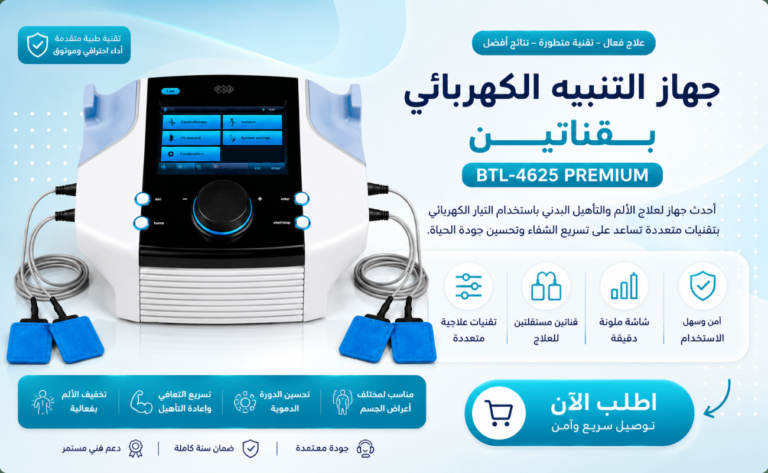
See: BTL-4625 Premium Electrotherapy Device and BTL-4825S Premium COMBO Device.
2. Therapeutic Ultrasound Devices
When choosing an ultrasound device, don’t settle for price alone. Compare the available frequencies, applicator head area, contact detection system, saved programs, mobility, and battery options if the device will be moved between rooms.

Learn about the Chattanooga Ultrasound Device or BTL-4710 Premium.
3. Shockwave and Advanced Technologies
Shockwave, TECAR and laser devices add advanced treatment capabilities, but they require a choice based on case types, team expertise and a clear plan for operating the device. Compare power, operating modes, applicators, training, warranty and maintenance instead of relying on the technology’s name alone.
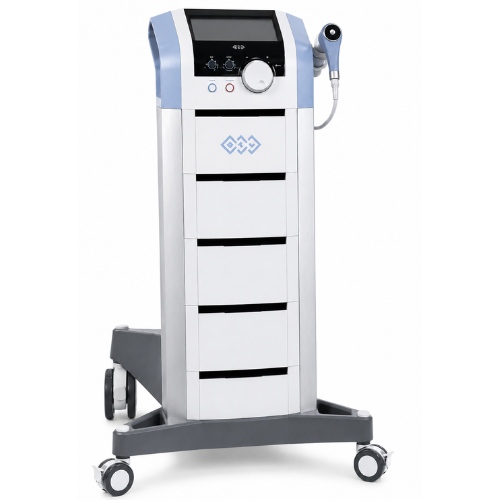
Also read: The Complete Guide to the BTL-6000 RSWT PRO, and learn about the BTL-6000 TR-Therapy Elite.
Third: Setting Up the Physiotherapy Center’s Rooms
Assessment and Individual Treatment Room
- A treatment table suited to the session type and room size.
- A therapist’s chair and a storage unit for accessories and consumables.
- Tools for measuring range of motion, strength and functional assessment.
- Privacy solutions and a cleanable work surface.
You can check out the 3-Section Electric Physiotherapy Table.
Exercise and Movement Rehabilitation Hall
The hall needs flexible movement space, wall bars or parallel bars when needed, a mirror, resistance and balance tools, and pedal exercisers or rehabilitation bikes. Equipment density should match the size of the hall so that too much equipment doesn’t become an obstacle to movement.
Pediatric Room
It is equipped according to the target ages and conditions, and may include CME tools, therapy balls and rolls, stairs and ramps, balance and motor skills tools, and suitable tables. The design should take into account safety and ease of supervision and cleaning.
See the CME Pediatric Physiotherapy Tools.
Neurological Rehabilitation Room
It may include parallel bars, a therapy mirror, gait and balance training tools, stairs and ramps, limb exercisers, and neurological examination tools. Equipment selection depends on the expected independence level of patients and the type of programs the team will offer.
Fourth: Center Setup Packages by Project Size
Starter Package
For a small clinic or center focused on assessment, electrotherapy and basic exercises.
- Treatment tables
- Electrotherapy device
- Ultrasound or Combo
- Assessment and exercise tools
Professional Package
For a multi-room center with higher operating capacity and more diverse services.
- Multi-channel devices
- Electric tables
- Integrated rehabilitation area
- One advanced technology
Comprehensive Package
For a center covering orthopedics, sports, neurology or pediatrics.
- Specialized rooms
- Shockwave/TECAR/Laser as planned
- Neurological or pediatric rehabilitation
- Training, operation and maintenance
Important: These are planning tiers, not mandatory lists; the final list is built after studying the space, services and budget.
Fifth: How Is a Physiotherapy Center Setup Budget Built?
The budget isn’t made up of equipment prices alone. Take into account the cost of shipping, installation, training, accessories and consumables, warranty and maintenance, electrical work and furniture, and the appointment and records management system. You should also set aside a reserve for spare parts and fast-consumed accessories.
Sixth: Pre-Purchase Equipment Checklist
- Is the device suitable for the services defined in the center’s plan?
- Are its specifications and accessories documented in the quotation?
- Is installation and user training available?
- How long is the warranty, and what does it cover and exclude?
- Are maintenance, spare parts and consumables available?
- Are the electrical, space and ventilation requirements suitable for the site?
- Have the regulatory requirements for the device and facility been verified?
- Is there a plan for receiving the device, inspecting it and documenting commissioning?
FAQs About Setting Up a Physiotherapy Center
What are the most important devices for opening a small center?
A center usually starts with treatment tables, assessment tools, an electrotherapy device, an ultrasound or Combo device, and exercise, resistance and balance tools. The list changes depending on the center’s specialty and the patient groups it serves.
Is it better to buy a Combo device or separate devices?
A Combo device saves space and may suit the startup phase, while separate devices give greater operational flexibility when there are several rooms or simultaneous sessions. The decision depends on workload and expansion plans.
When should I add a Shockwave or TECAR device?
When the technology fits the center’s specialty, a trained specialist is available, and there is sufficient demand and a clear plan for operating the device and recovering the investment.
Does the setup cost include shipping and installation?
Not always. The quotation should clearly itemize devices, accessories, shipping, installation, training, warranty, taxes and any other fees separately.
How do I choose a treatment table?
Define the session type first, then compare the number of sections and movements, height range, load capacity, therapist access, material, warranty and maintenance service.
Can the center be set up in phases?
Yes. You can start with basic equipment covering the most requested services, then add advanced devices and specialized rooms as patient numbers and revenue grow.
Need an equipment list tailored to your project?
Saudi Medical Store provides setup solutions for physiotherapy and rehabilitation centers, from equipment selection to supply, training and after-sales service, depending on the project scope.
Disclaimer: This content is a general planning and purchasing guide and is not a substitute for the requirements of the competent authorities or the engineering or clinical assessment of the project. Verify the applicable requirements before contracting and implementation.
FAQ
What are the most important devices for opening a small physiotherapy center?
A center usually starts with treatment tables, assessment tools, an electrotherapy device, an ultrasound or Combo device, and exercise and balance tools.
Is it better to buy a Combo device or separate devices?
A Combo device saves space and suits the startup phase, while separate devices give more flexibility with several rooms or simultaneous sessions.
When should I add a Shockwave or TECAR device?
When the technology fits your specialty, a trained specialist is available, and there is enough demand and a clear plan to recover the investment.
Can the center be set up in phases?
Yes. Start with basic equipment, then add advanced devices and specialized rooms as patient numbers grow.
Two comments