
A Practical Guide to Monitoring Blood Pressure at Home
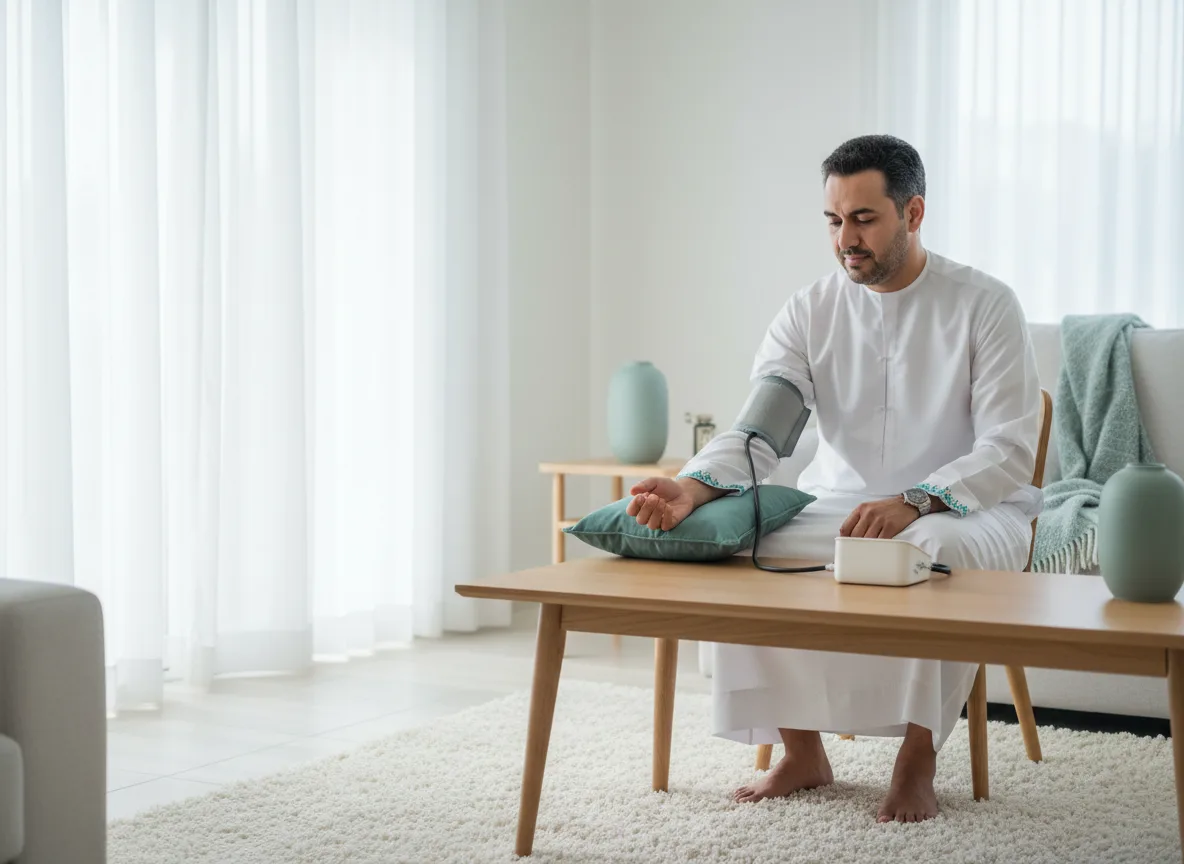
Measuring blood pressure at home can help both doctor and patient track readings away from the stress of the clinic, but the value of a reading depends largely on the measuring method, cuff size, body position and timing. This guide explains the practical steps for getting more consistent home readings, without treating the device as a tool for self-diagnosis.
Before Measuring Blood Pressure at Home
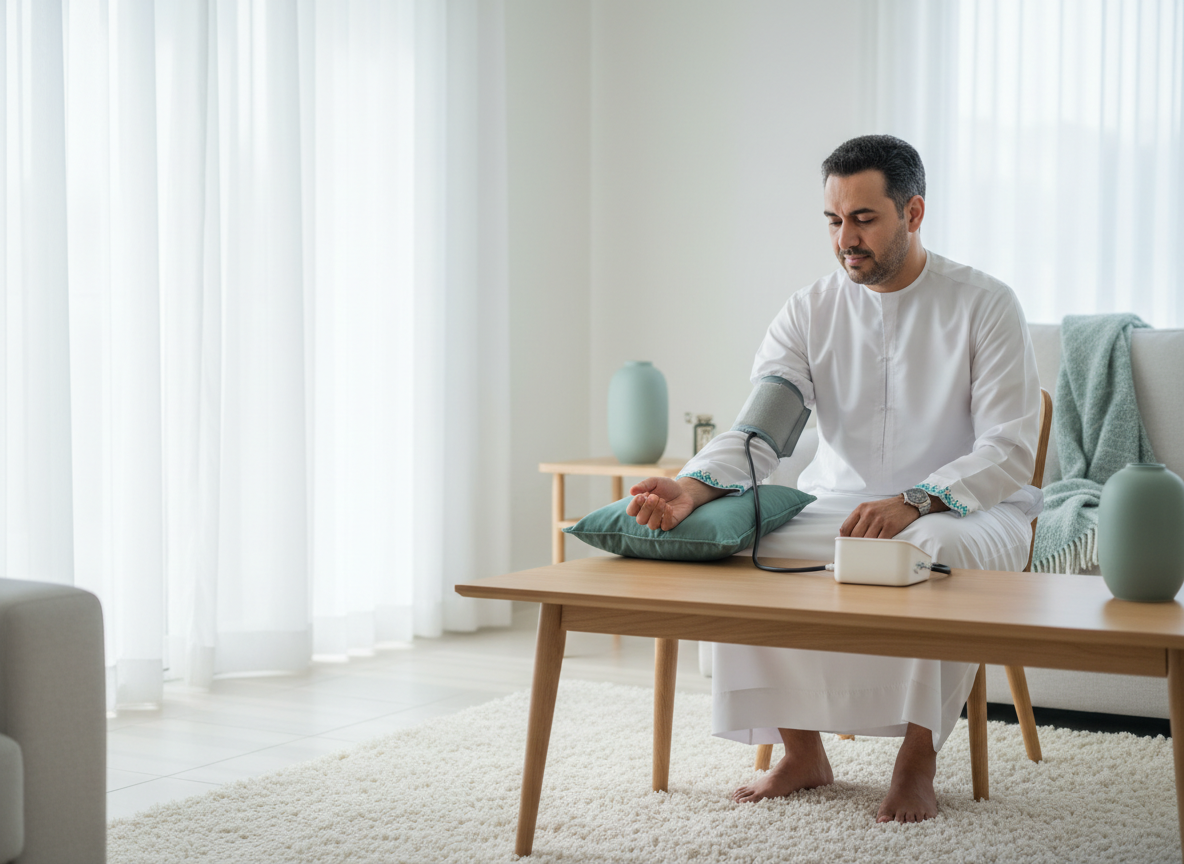
To make your measurements more consistent, try to measure under similar conditions each time. Avoid measuring right after physical exertion, and sit quietly for a few minutes before starting. Follow your device instructions and any specific instructions from your doctor, as the timing and number of readings may vary depending on your condition and treatment plan.
Sit somewhere comfortable and avoid talking during the measurement.
Support your back and place your feet flat on the floor without crossing your legs.
Rest your arm on a stable surface so the cuff is roughly at heart level.
How to Measure Blood Pressure in 8 Steps
- Choose the right cuff size: An ill-fitting cuff can affect reading accuracy; check the arm circumference range specified for the device.
- Sit correctly: Back supported, feet on the floor, and arm relaxed on a stable surface.
- Place the cuff on your bare arm: Avoid placing it over thick clothing, and follow the position shown in the device manual.
- Don’t talk during the measurement: Stay calm until the device finishes the reading.
- Record the systolic and diastolic pressure: You can also record your pulse if the device displays it.
- Repeat the measurement if your doctor recommends it: Having more than one reading is often more useful than relying on a single number, but follow the plan set by your healthcare provider.
- Use the same arm and timing as much as possible: Unless a specialist advises otherwise.
- Keep an organized log: Write down the date, time, readings and any important notes, such as a missed medication dose or symptoms.
Common Mistakes That Can Affect Blood Pressure Readings
| Mistake | What’s Better? |
|---|---|
| Measuring while talking or moving | Stay still and calm until the measurement is complete. |
| Placing the cuff over thick clothing | Place it on the bare arm according to the device instructions. |
| Leaving the arm hanging | Rest the arm on a stable surface at a suitable level. |
| Using an ill-fitting cuff | Check your arm circumference and the cuff range before buying. |
| Worrying about a single reading | Record your readings and discuss the pattern with your healthcare provider instead of interpreting one number alone. |
How to Choose a Home Blood Pressure Monitor
When buying a home device, focus on ease of use, a clear display, the availability of a cuff that fits the user’s arm circumference , and the ability to store readings if that matters to you. Automatic upper-arm monitors are common for home use, while choosing the most suitable type should take into account the user’s needs and the guidance of their healthcare provider.
Saudi Medical Store offers several options you can compare by specifications, including the Geratherm Active Control, iCare BPTrack, and Microlife BP B1 Classic. Compare cuff size, memory, operation and warranty before choosing.
How to Deal with Home Readings
Do not change your blood pressure medication or its dose based on a home reading on your own. Share your reading log with your doctor, especially if readings are repeatedly higher or lower than the range they set for you. Diagnosis and setting blood pressure targets depend on health status, age, medications and other factors.
If a very high or very low reading appears along with worrying symptoms such as chest pain, shortness of breath, sudden weakness or numbness, difficulty speaking or seeing, fainting or severe deterioration, seek urgent medical evaluation. Do not rely on re-measuring alone when emergency symptoms are present.
FAQs
Which arm should I use to measure blood pressure?
Readings can differ between arms. It’s best to follow your doctor’s guidance or the instructions given to you after assessment, then use the same arm for daily monitoring as much as possible.
Can blood pressure be measured over clothing?
For a more consistent measurement, the cuff is usually placed on the bare arm according to the manufacturer’s instructions, not over thick clothing.
Why do two consecutive readings differ?
Blood pressure naturally varies, and movement, stress, position and timing also affect it. That’s why your healthcare provider may ask you to record several readings on different days instead of relying on a single number.
Does a home blood pressure monitor replace the doctor?
No. The device is a monitoring tool; on its own it doesn’t determine the cause of high or low blood pressure, nor does it decide treatment.
What’s the most important specification when buying a monitor?
One of the most important points is a cuff size that fits the arm circumference, along with ease of use, a clear reading and the features the user needs.
Looking for a blood pressure monitor for home use?
Compare the blood pressure monitors available at Saudi Medical Store, and check the cuff size, specifications and warranty before ordering.
Disclaimer: This article is for general education and does not replace diagnosis or medical follow-up. Follow your doctor’s instructions and the manufacturer’s instructions for your monitor.
FAQ
Which arm should I use to measure blood pressure?
Readings can differ between arms, so follow your doctor's guidance and then use the same arm for daily monitoring.
Can blood pressure be measured over clothing?
For a more consistent reading, place the cuff on the bare arm according to the manufacturer's instructions, not over thick clothing.
Why do two consecutive readings differ?
Blood pressure naturally varies, and movement, stress, position and timing also affect it.
Does a home blood pressure monitor replace the doctor?
No. It is a monitoring tool; it does not determine the cause of high or low blood pressure or decide treatment.