
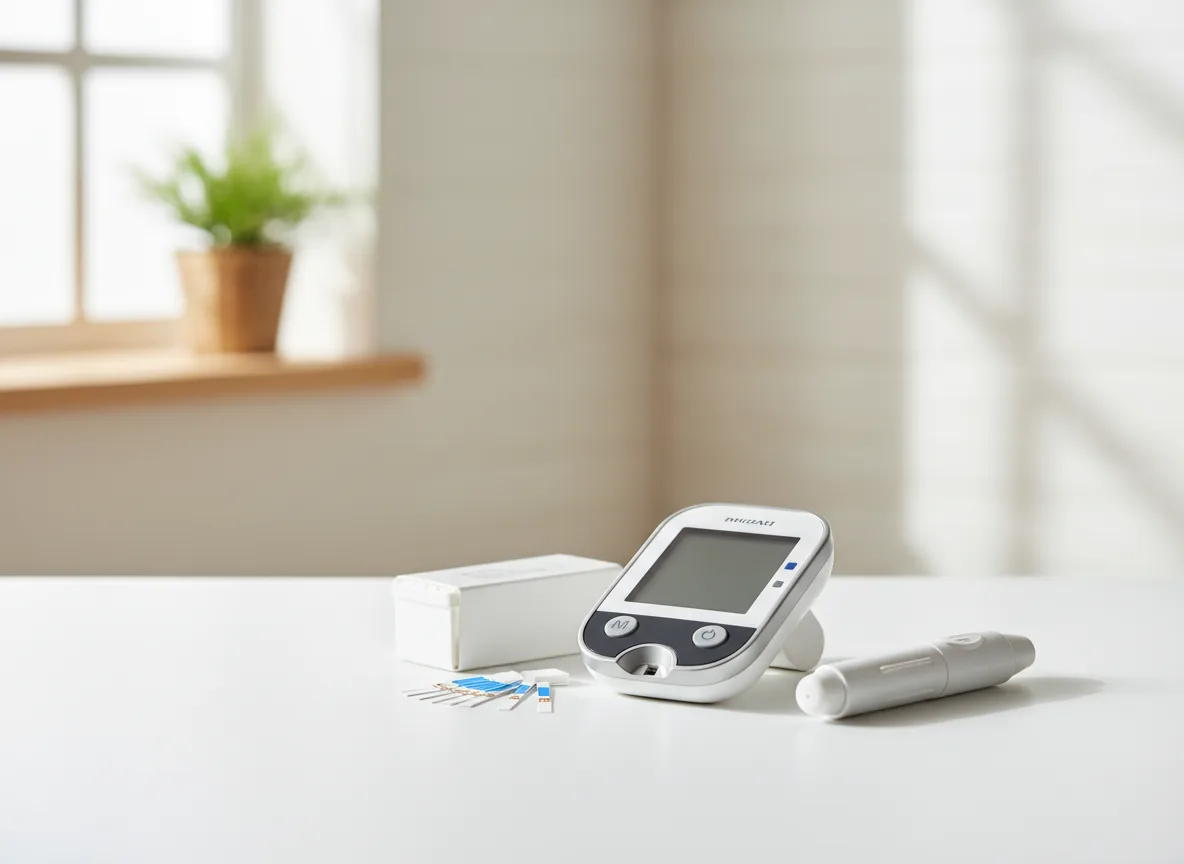
Checking blood sugar at home is a practical way to monitor glucose levels according to the plan set by your doctor or healthcare provider. However, reading accuracy doesn’t depend on the device alone; it is affected by how you wash your hands, the condition of the test strips, the size of the blood sample, and how you store supplies and record results. In this guide, we explain the steps for using a home glucose meter in an organized way, the common mistakes that can affect the reading, and how to deal with results without replacing medical assessment.
What Is a Home Glucose Meter?
A home blood glucose meter is a small device usually used with dedicated test strips and a small blood sample to display a glucose reading. Devices differ in the required sample size, how fast results appear, memory capacity, and whether they connect to phone apps, so it’s important to follow the manufacturer’s instructions for the specific meter and strips you use.
How to Check Blood Sugar at Home Step by Step
1. Prepare the Meter and Supplies
Place in front of you the glucose meter, a compatible test strip, the lancing device and its lancet, as well as a safe way to dispose of sharps according to local guidelines.
2. Wash and Dry Your Hands Well
Wash your hands with soap and water and dry them well before testing. Food residue or sugary liquids on your fingers can affect the result. Avoid testing on a wet finger.
3. Check the Test Strip
Make sure the strips are suitable for your meter model, are stored as recommended, and have not passed their expiry date. Close the strip container right after removing a strip if the product instructions require it.
4. Insert the Strip into the Meter
Insert the test strip in the correct direction and wait for the meter’s signal that it’s ready to receive the sample. Operating steps may differ between devices, so refer to the user manual when needed.
5. Use the Lancing Device Correctly
Use a new lancet according to the device instructions, and adjust the lancing depth to suit your skin. The side of the fingertip is often more comfortable than the center. Do not share the lancing device or lancets with anyone else.
6. Apply the Blood Sample to the Strip
Bring the blood drop close to the sample area of the strip as described by the manufacturer. Do not add a second sample unless the meter explicitly allows it, as some systems consider the sample invalid once the test has started.
7. Read and Record the Result
After the reading appears, record the number along with the time of the test and its context, such as before or after meals, as instructed by your healthcare provider. Recording readings regularly helps your doctor interpret patterns instead of relying on a single reading.
Common Mistakes That Can Affect Glucose Meter Readings
- Testing before cleaning your hands or with moisture on the finger.
- Using strips that are incompatible with the meter or expired.
- Storing strips in heat or humidity that doesn’t match the manufacturer’s instructions.
- Applying an insufficient amount of blood to the test strip.
- Using the meter or strips outside the recommended operating conditions.
- Ignoring error messages or not checking the meter manual when an unexpected reading appears.
When Should Blood Sugar Be Checked?
How often and when you test varies from person to person depending on the type of diabetes, the medications or insulin used, the treatment plan, and overall health. Your healthcare provider may ask you to test at specific times, such as before or after meals or when certain symptoms appear. So there is no single testing plan that suits everyone, and it’s best to follow the schedule recommended by your medical team.
How to Deal with an Unexpected Reading
If the reading seems inconsistent with how you feel, review hand hygiene, the strip’s condition, the testing method and the meter instructions; it may be appropriate to retest with a new strip. Do not change medication or insulin doses based on this article. If you have severe symptoms, or a worrying reading according to the plan your healthcare provider gave you, seek appropriate medical guidance or urgent care as needed.
Choosing a Glucose Meter for Home Use
When comparing glucose meters, focus on screen readability, availability of compatible strips, the required blood sample size, portability, memory features, and a clear user manual. You should also make sure to buy the meter and its supplies from a trusted source and read the manufacturer’s instructions before use.
You can visit the Diabetes section at Saudi Medical Store to browse articles and content related to home care and monitoring.
Frequently Asked Questions About Checking Blood Sugar at Home
Does a home glucose meter reading differ from a lab test?
There may be differences because the measurement method, sample and equipment differ. A home meter is a monitoring tool used according to the instructions and your healthcare provider’s plan, and it does not replace lab tests ordered by your doctor for diagnosis or follow-up.
Can a glucose test strip be reused?
Common glucose test strips are designed for single use. Follow the manufacturer’s instructions for the meter and strips, and do not reuse a used strip.
Why does an error message appear on the glucose meter?
The message may be related to how the strip was inserted, the sample amount, the strip’s condition, operating conditions, or another reason specific to the meter model. Check the error code in the user manual instead of guessing the cause.
Should test results be shared with the doctor?
Keeping an organized log of readings and sharing it with your healthcare provider at follow-up visits can help them understand patterns and make treatment decisions suited to your condition.
Note: This content is for general awareness and is not intended for diagnosing diabetes or adjusting treatment. Follow your device instructions and your doctor’s or healthcare provider’s plan.
FAQ
Does a home glucose meter reading differ from a lab test?
There may be differences because the method, sample and equipment differ. A home meter is a monitoring tool and does not replace lab tests ordered by your doctor.
Can a glucose test strip be reused?
No. Common glucose test strips are designed for single use; follow the manufacturer's instructions.
Why does an error message appear on the glucose meter?
It may relate to strip insertion, sample amount, strip condition or operating conditions, so check the error code in the user manual.
Should test results be shared with the doctor?
Yes. Keeping an organized log of readings and sharing it with your healthcare provider helps them understand patterns and make the right treatment decisions.