
A General Nutrition Guide for Managing Diabetes
Healthy nutrition for people with diabetes doesn’t mean avoiding carbohydrates completely; rather, it means managing the amount and type and distributing meals in line with medications, activity and the blood sugar targets set by the care team.
How to Build a Balanced Meal
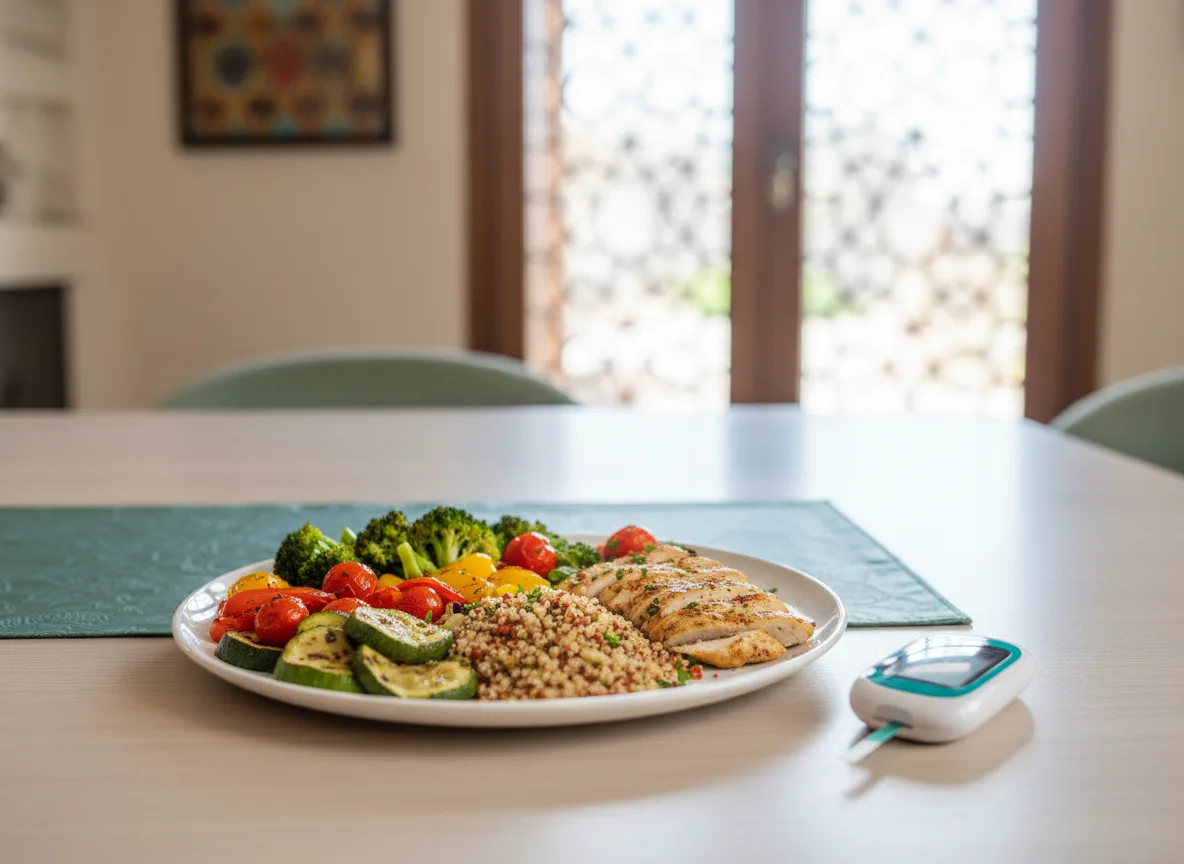
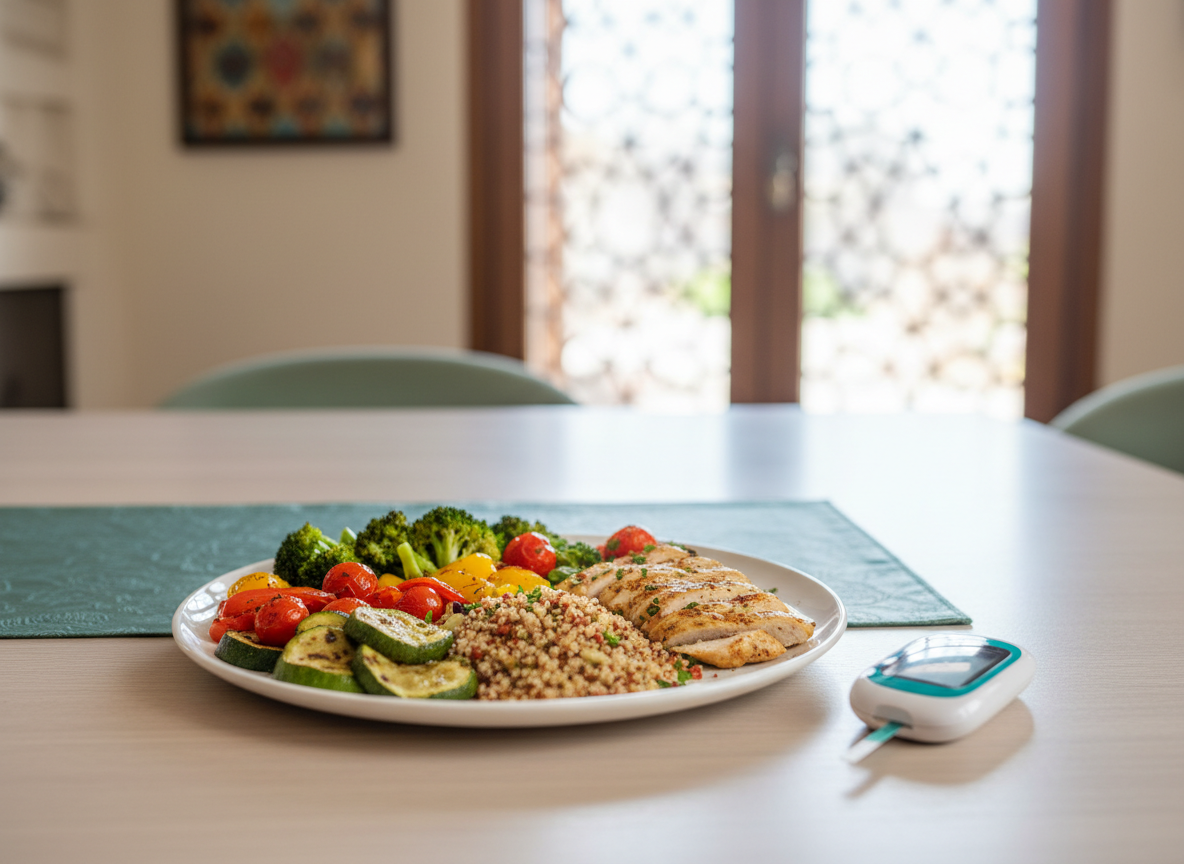
The plate method can be used as a practical approach: a large portion of non-starchy vegetables, a suitable protein source, and a measured amount of carbohydrates, plus water or an unsweetened drink according to the meal plan.
Vary non-starchy vegetables and the ways you prepare them.
Choose sources that suit your meal plan, such as fish, chicken and legumes.
Focus on amount, quality and fiber instead of complete avoidance.
Carbohydrates and Blood Sugar
Carbohydrates affect blood sugar, so it helps to pay attention to portion size, read food labels and spread them throughout the day. Needs differ from person to person, especially with insulin or medications that can cause low blood sugar.
Daily Food Choices
- Vegetables, whole grains, legumes and suitable fiber sources.
- Varied protein sources and unsaturated fats in suitable amounts.
- Reducing sugary drinks, added sugars and ultra-processed foods.
- Watching sodium and saturated fat as part of an overall healthy plan.
Monitoring and Checking Blood Sugar
Monitoring blood sugar in the way recommended by your care team helps you understand how your body responds to meals, activity and medications. You can browse Diabetes Care Devices and Supplies.
FAQs
Should fruit be avoided?
Fruit isn’t automatically off-limits; the amount, type and timing are considered within your total carbohydrates and individual plan.
Are small, frequent meals necessary for everyone?
No. Meal timing depends on lifestyle, medications and the treatment plan, and isn’t a fixed rule for every patient.
Do products labeled “sugar-free” not raise blood sugar?
Not necessarily; you should read the total carbohydrates, ingredients and serving size.
Disclaimer: This information is general and doesn’t replace the plan of your doctor or dietitian, especially when using insulin or having other health conditions.
FAQ
Should people with diabetes avoid fruit?
Not automatically; the amount, type and timing are considered within total carbohydrates and the individual plan.
Are small, frequent meals necessary for everyone?
No. Meal timing depends on lifestyle, medications and the treatment plan.
Do sugar-free products not raise blood sugar?
Not necessarily; check the total carbohydrates, ingredients and serving size.